Services / Rising damp
Rising Damp Harrogate | Diagnosis & Treatment
Diagnosis and treatment where ground moisture climbs through masonry
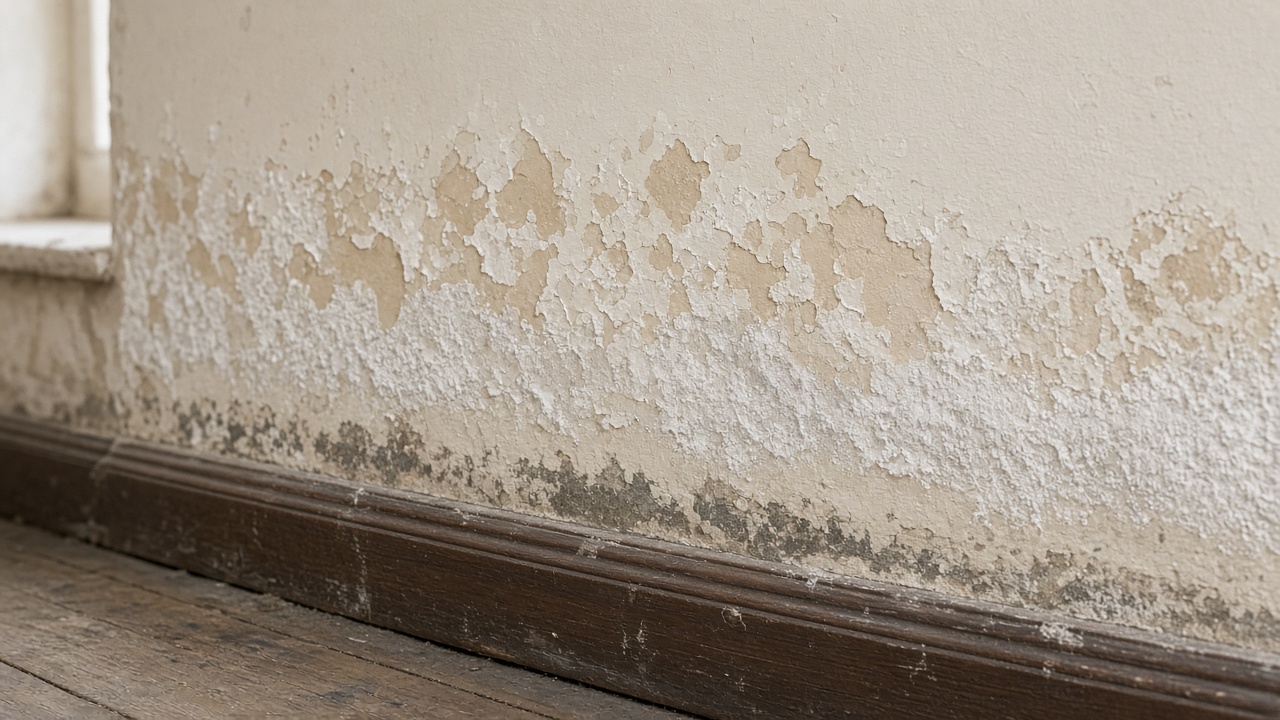
Rising damp in Harrogate is ground moisture climbing through porous masonry where a damp-proof course is missing, bridged or failed. Typical signs include tide marks and staining low on ground-floor walls, powdery salts, soft or blown plaster near skirting, and a persistently cold, musty feel at floor level. Treatment only makes sense after confirming the pattern is truly rising damp — not condensation or rain penetration. Enquire with your postcode and photos for a practical next step.
Causes & when you need treatment
Rising damp can appear where:
- The original damp-proof course is absent (common in some older solid-wall stock)
- External ground levels, paths or render bridge an existing DPC
- Internal finishes or raised floors create a moisture path around the barrier
- Prolonged wet ground and capillary action keep feeding the wall base
You may need professional attention when low-level staining returns after redecorating, plaster crumbles near the skirting, or timber near the floor feels soft. If mould is mainly upstairs or behind furniture on cold walls, start with condensation & mould instead of assuming rising damp.
How we approach rising damp
- Listen and inspect — map which walls and heights are affected; note salts and finishes.
- Rule out lookalikes — check for penetrating sources and condensation patterns first where symptoms overlap.
- Confirm approach — chemical DPC injection, bridging removal, or other methods only where rising damp is the right diagnosis.
- Treat and reinstate — remove contaminated plaster as needed, install the agreed DPC works, allow drying, then specialist replastering.
- Advise on timber — if joists or skirtings have been wet, discuss timber treatment as a linked check.
A formal damp survey is often the best first step where the cause is unclear.
Neighbourhoods we often cover
Rising damp enquiries are common in Bilton, Oatlands and Starbeck, where period terraces and solid-wall construction sit alongside later homes. Hillside streets and older ground-floor layouts can make bridging and ground levels worth checking carefully.
Cost teaser
As a typical guide, chemical DPC plus associated works for a typical wall run often sits around £800–£2,500+; larger packages with extensive plaster renewal can be higher. Full bands: pricing FAQ. Exact figures follow survey — not a menu price.
FAQ
How do I know it is rising damp?
Low-level tide marks, salt deposits and ground-floor concentration are classic clues — but they are not proof on their own. A survey with moisture readings is safer than guessing from one photo.
Will you always inject a chemical DPC?
No. If the existing DPC is bridged by raised paths or render, removing the bridge may be enough. Injection is for confirmed rising damp where a new barrier is needed.
How long before I can redecorate?
Drying and specialist plaster systems need time. We explain realistic timescales for your scope after assessment — rushing ordinary emulsion onto damp or salt-laden walls often fails.
Can rising damp affect timber floors?
Yes. Prolonged moisture at skirtings and joist ends can raise wet-rot risk. Mention soft timber or musty voids when you enquire.
Is rising damp covered by insurance?
Often not for gradual rising damp — see cautious guidance on the pricing FAQ.
Enquire about rising damp
Describe the walls affected, your Harrogate postcode, property type, and whether salts or soft timber are present.
Visual reference
Examples of these conditions
AI illustrative photography for recognition only — not photographs of completed local jobs.