Services / Timber treatment
Timber Treatment Harrogate | Damp-Linked Woodcare
Wet and dry rot risk where damp has affected wood
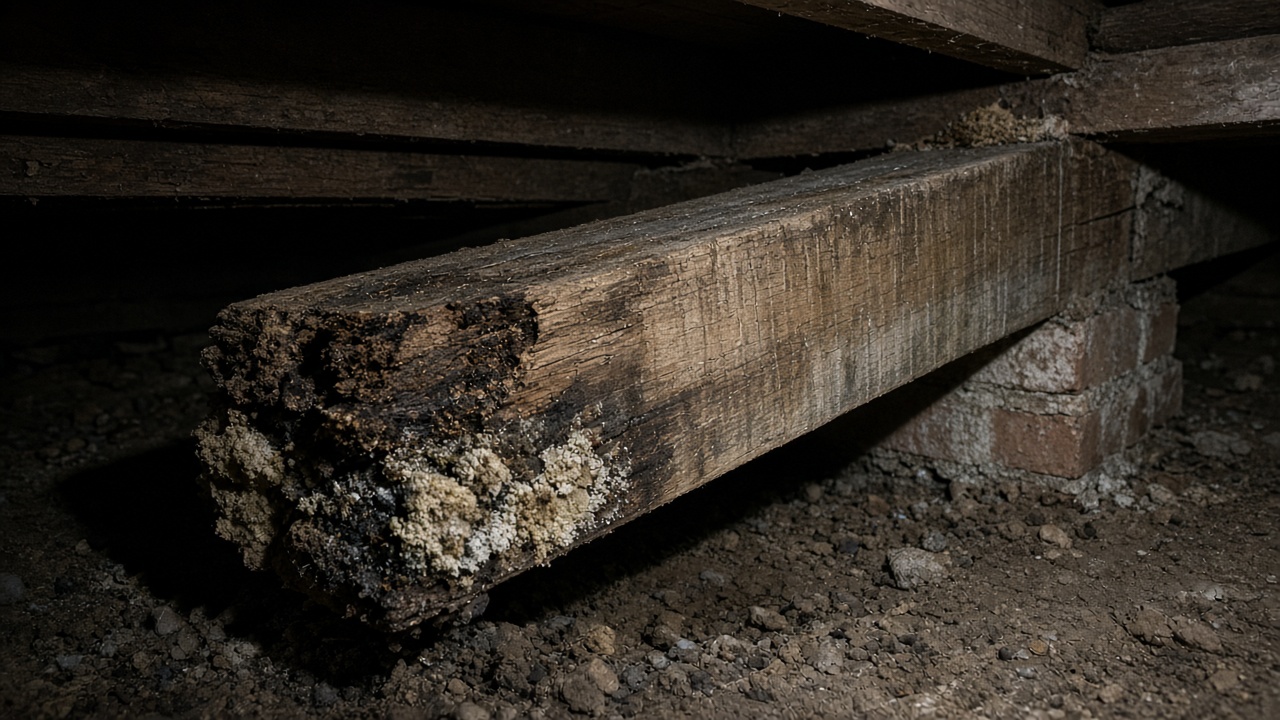
Timber treatment in Harrogate here means addressing wood that has been weakened or put at risk by prolonged damp — typically skirtings, floor joists, wall plates and cellar linings — not decorative staining for its own sake. Moisture from rising damp, penetrating leaks or wet cellars can feed wet rot; poorly ventilated voids can raise wider fungal concerns. The sensible sequence is usually stop the moisture, assess the timber, then repair or treat what remains. Enquire with your postcode and photos of soft or stained wood.
Causes & when timber treatment is needed
Damp-linked timber problems often follow:
- Long-standing rising damp at ground-floor skirtings and joist ends
- Penetrating leaks wetting built-in cupboards or ceiling timbers
- Wet cellars affecting stairs, shelves and structural members
- Condensation and poor airflow in closed voids (less often “classic” wet rot, but still a risk to finishes)
Consider a timber check when wood feels soft, crumbles, smells musty, shows fungal growth, or when skirtings distort beside damp plaster. Pair this with rising damp, penetrating damp or basement tanking rather than treating timber alone while the wall stays wet.
How damp-linked timber work typically runs
- Confirm moisture source — often via a damp survey so treatment is not wasted.
- Inspect accessible timber — skirtings, boards, joist ends, cellar members; note decay vs surface staining.
- Dry-down plan — moisture control and building repairs first where needed.
- Cut out and replace — remove decayed sections beyond sound wood where structurally required.
- Treat remaining timber — appropriate preservative or specialist treatment where specified for the species and exposure.
- Reinstate — new skirtings, boards or supports; advise on ventilation of voids.
We do not invent dry-rot “whole-house” scare stories or claim guaranteed eradication rates on this page. Scope follows what is found.
Neighbourhoods we often cover
Timber-and-damp questions arise in period homes across Oatlands, Starbeck and Bilton, where original floors, cellars and solid walls meet modern heating and insulation changes. Mention suspended timber floors or cellar joists when you enquire.
Cost teaser
Timber work is usually bespoke once decay extent is known. Small skirting replacement differs from joist repair. Guide orientation for the damp side of the job sits on the pricing FAQ; timber line items follow inspection. Enquire rather than relying on a web “from” price.
FAQ
Is all soft timber dry rot?
No. Wet rot linked to localised damp is common; dry rot is a specific fungus with different spread characteristics. Identification matters — avoid panic labels without inspection.
Can I treat timber without fixing the damp?
Temporary at best. Moisture left in place usually returns the problem. Fix or manage the damp source first.
Will you lift all floorboards?
Only as far as needed to see and reach affected members. Extent is agreed after assessment, not assumed.
Do you treat furniture and antiques?
This page focuses on building timber linked to damp. Specialist furniture conservation is a different craft.
Should timber treatment wait for a damp survey?
Often yes, where the moisture source is unclear — see damp survey.
Enquire about timber treatment
Describe which timbers are affected, any damp history, and your Harrogate-area postcode. Photos of decay or staining help.
Visual reference
Examples of these conditions
AI illustrative photography for recognition only — not photographs of completed local jobs.